







Medebridge and beyond: the future of CPPAs
Discover how CPPAs are shifting from volume to value, with the award-winning Medebridge project leading the way.
Most recently, Inspired was recognised at the 2026 Green Awards UK, which celebrate organisations demonstrating a strong commitment to environmental responsibility and sustainable innovation.
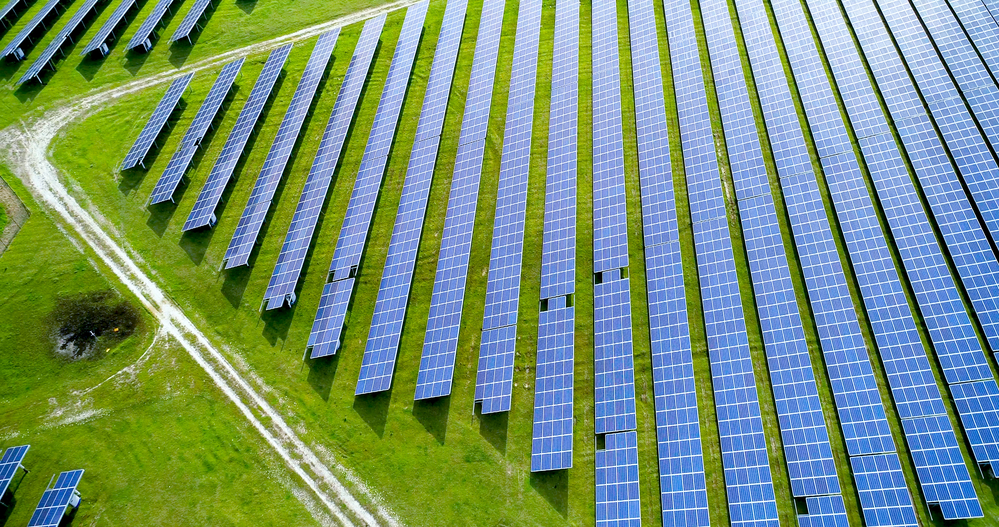
The award showcased the collaboration behind the 71MWp Medebridge Solar Farm and a 10-year CPPA supplying 65% of The University of Manchester’s electricity.
Inspired shared The Green Collaboration Award alongside Enviromena, The University of Manchester, Close Brothers Energy and EDF.
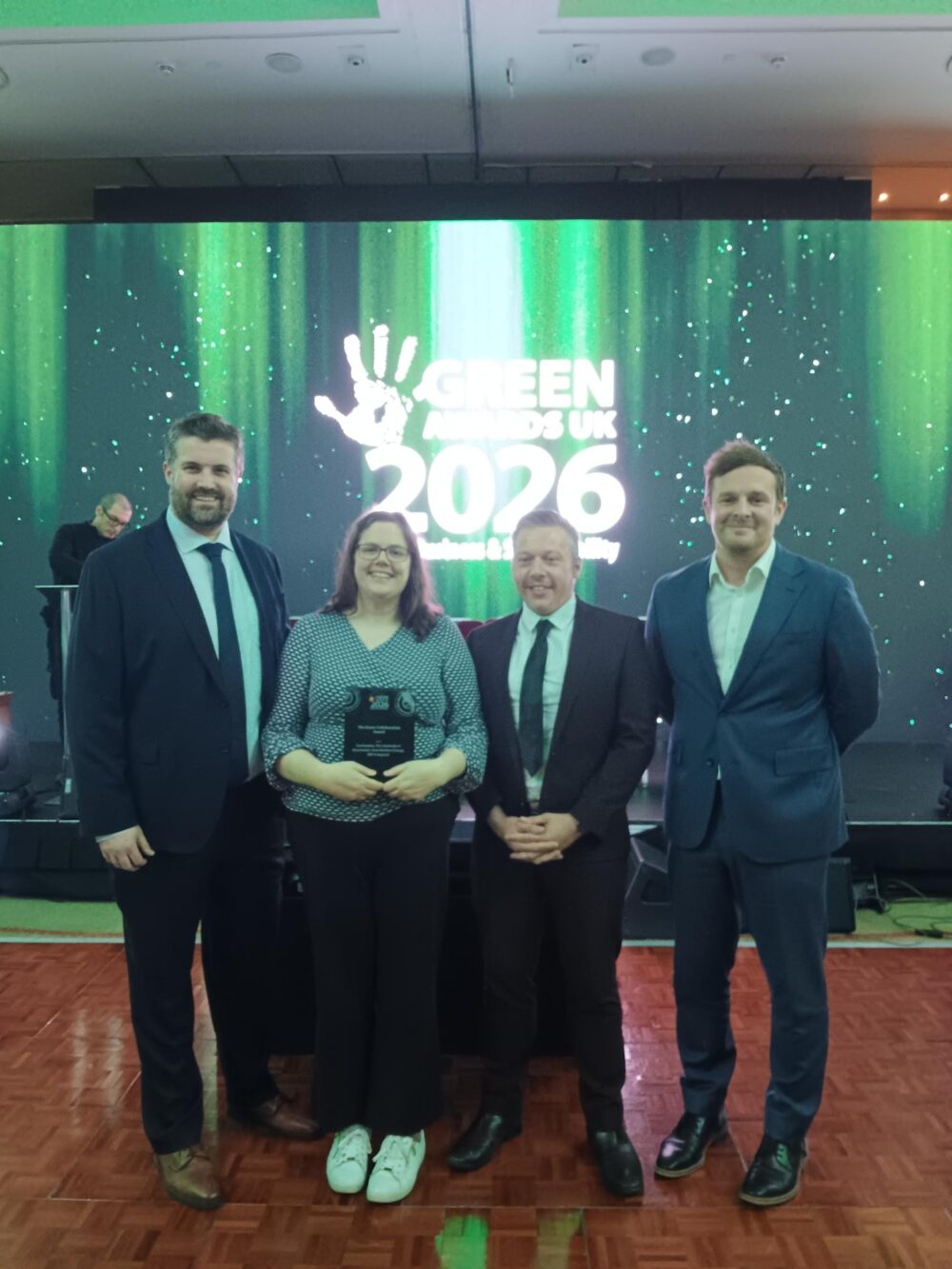

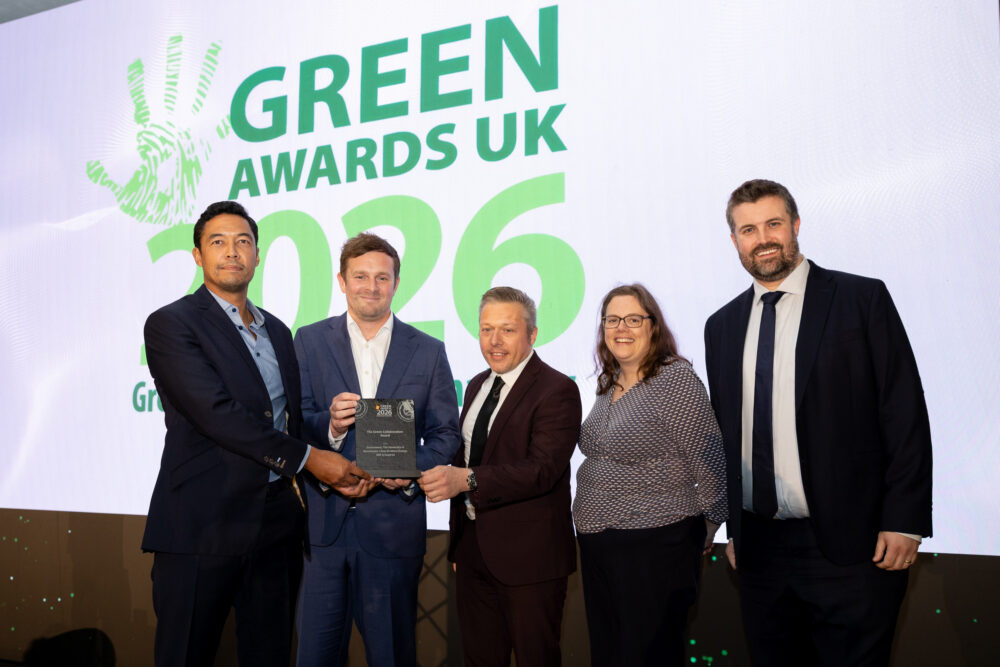
Pictured:
Ross Irvine, Head of PPA Origination & Structuring, EDF | Karen Hosking, Director: PPA Markets, Inspired | Lee Barlow, Finance and Administration Manager, The University of Manchester and Chris Marsh, CEO, Enviromena
Three years in the making, this project combined the expertise of renewable generators, businesses, financial partners and energy specialists to create a commercial solution that delivers long-term value.
Projects like Medebridge reflect a wider shift. The Corporate Power Purchase Agreement (CPPA) market continues to evolve as businesses look for greater budget certainty, credible renewable electricity and new ways to support their net zero ambitions, with several key developments ahead.
What is changing in the CPPA market?
CPPAs have traditionally brought together renewable generation and business demand through a long-term commercial agreement.
Budget certainty remains one of the biggest draws for many businesses. A CPPA can provide greater visibility of future electricity costs while supporting investment in renewable generation.
The UK Government’s 2026 CPPA call for evidence response highlighted the potential for CPPAs to provide businesses with stable prices and generators with greater revenue certainty. The document also identified opportunities to develop the market further.
However, the market is growing more sophisticated.
Meanwhile, renewable generators are looking for commercial structures that reflect an increasingly complex energy market.
With both sides looking for more from their agreements, CPPAs have an opportunity to evolve.
What will 2027 and 2028 mean for CPPAs?
The next two years will put CPPA innovation to the test.
The interplay between government-supported renewable generation, wholesale markets and corporate procurement is set to become increasingly important.
Allocation Round 8 of the Contracts for Difference (CfD) scheme is now progressing under a revised framework, supporting the next wave of low-carbon generation.
CPPAs and CfDs serve different purposes, but understanding how various revenue and procurement structures can work alongside one another will be essential for generators, investors and corporate buyers.
The opportunity extends beyond new-build generation.
More than 30GW of renewable capacity is expected to reach the end of Renewables Obligation support from 2027 onwards. The government’s CPPA response highlighted CPPAs as one potential route for some of these operational assets, supporting continued investment, life extension or repowering.
This could give businesses more choice, reinforcing the need to understand which structure suits the customer, the generator and the underlying asset.
From annual matching to half-hourly traceability
Expectations around renewable electricity are evolving beyond simply buying a volume that broadly matches annual consumption.
Businesses now want greater visibility of when renewable electricity is generated, when electricity is consumed and how the renewable attribute is evidenced.
The focus is shifting from simply buying renewable electricity to demonstrating credible progress towards targets.
Supply-chain pressure is now shaping corporate energy strategies, while initiatives such as RE100 continue to define expectations around credible renewable electricity procurement.
This paves the way for matched, traceable power.
But no single solution will suit every client. What matters is the flexibility to design procurement around the client’s objectives, risk appetite and sustainability requirements.
What could the next generation of CPPAs look like?
While the next generation of CPPAs will be far more diverse, traditional long-term agreements will still play a role, particularly where customers and generators want to build a lasting relationship.
The market is also likely to see more tailored approaches, including:
- Sleeved CPPAs, which combine renewable generation with the practical requirements of supplying a business.
- Baseload structures, which help customers manage the gap between intermittent generation and their consumption profile.
- Portfolio approaches, which bring together multiple renewable assets or customers to create greater flexibility.
- Shorter-term PPAs, which suit operational assets approaching the end of existing support mechanisms.
- More precise approaches to matching and traceability, helping businesses understand not just the annual volume of renewable electricity procuredg, but when and how that power is generated and consumed.
The common thread is flexibility, because the right PPA structure will now depend on the customer, the generator, the asset and the commercial objectives.
How can Inspired help?
With so many options now available, Inspired’s PPA Markets team can help find the right fit for your business, whether that’s a traditional or sleeved CPPA, a baseload or portfolio approach, or tailored matching and traceability.
That means looking beyond simply securing a volume of renewable electricity and understanding how a CPPA can support your wider energy strategy.
Generators, meanwhile, need to consider how different commercial structures can balance revenue certainty with an attractive proposition for corporate buyers.
The real value lies in bringing those two perspectives together.
The Medebridge Solar Farm project is a strong example of how aligning buyer and generator priorities benefits everyone involved.
What does the future hold for CPPAs?
CPPAs will continue to connect renewable generation with businesses pursuing decarbonisation.
However, the next phase will be defined by more than the number of agreements signed.
What the market needs now is innovation that delivers budget certainty, credible renewable power and a clearer picture of how that power is generated and consumed.
Heading into 2027 and 2028, the market has the momentum to build on the progress already being made – creating CPPAs that work harder for generators, customers and the UK’s wider energy transition.
What comes next for CPPAs is less about volume and more about value.
Whether you’re a business looking to secure renewable power or a generator seeking the right route to market, Inspired can help you find the right CPPA structure. Email [email protected] to start the conversation.
Header image: Medebridge solar farm. Photo credit: Enviromena