







The Iran conflict: Energy market prices have skyrocketed – or have they?
Lets talk about why only the front-year contracts have been significantly affected by the US-Israel-Iran conflict.
When major geopolitical incidents like the US-Israel-Iran conflict occur, headlines about rising energy prices soon follow – leading to panic and uncertainty among businesses about their next procurement move. How does this impact my energy costs?
However, it’s only been the front-year contracts that have been significantly affected by the US-Israel-Iran conflict. Let’s talk about why this is the case.
How has the Iran conflict impacted energy prices so far?
The below charts show how much the gas and power contracts have gone up on the first week of March following these events.
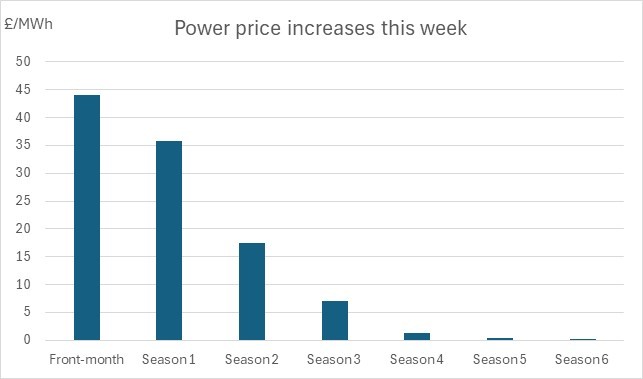
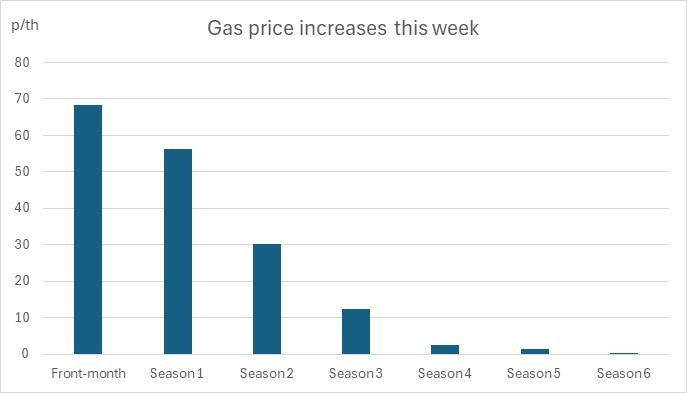
Season one and two in these charts are the front-year contracts, running from April-26 to March-27. As the impact of the conflict is all about the immediate impact on production and supply, the market movement has been felt strongest on these forward year prices.
Meanwhile, the mid and back end of the price curve are currently shielded from this by time. For example, it is very unlikely that this same set of threats to supply are still going to be impacting prices by 2028.
This is why it is so important for businesses, where possible, to focus their energy buying attention beyond these types of disruptive events – where the market is generally quieter and lower-priced.
Why is what you see on the news not often the full picture of the energy market?
News outlets often use the most responsive and changeable contracts to illustrate the impacts of disruptive events to the energy market.
Therefore, most news stories are likely quoting the front-month or even day-ahead contract when describing how much energy prices have gone up so far this week.
It is understandable why these types of contracts are commonly used for illustrative purposes; reporting that the 2028 market has gone up 1% does not quite make the same headlines.
Therefore, it is important that those responsible for energy purchasing for their business seek the complete details on price to fully assess the impact that this has had on your energy spend.
What can I do to mitigate the impact of events like this on my energy contracts?
Every organisation is unique in portfolio and requirements and the procurement options available to you must therefore be considered carefully.
However, major geopolitical events like this illustrate why Inspired’s energy experts often encourage our clients to obtain three-year flexible contracts.
A flexible contract allows organisations to spread the risk associated with energy price volatility across multiple purchasing points. This type of contract gives you complete visibility over the various supplier and industry costs, as well as the raw cost of your gas and electricity.
Choosing a flexible risk-managed contract means you will make several purchasing decisions throughout your contract – the price you pay depends on the market at the time of purchase. In these types of contracts, the front-year is very responsive to drivers such as the US-Israel-Iran conflict.
Moreover, recognising the benefit of longer-term contracts is important. When major disruptions arise, the front-year periods nearly always suffer, while time protects the later years from the increases. This is because when those periods reach delivery, this current geopolitical influence is likely to no longer impact the market.
How can Inspired help?
Understanding the nuance and the detail of the energy market is paramount, especially in times of disruption.
Energy markets do not simply move up or down anymore: Power prices can go down while gas prices rise. Forward year-contracts can rally while later year contracts fall.
Therefore, having an energy expert talk you through the intricacies when securing energy purchases for your business is crucial. Inspired’s risk management experts can help you create a bespoke energy procurement strategy – tailored to your requirements and flexible enough to respond to an ever-changing market.
If you would like to discuss how we can best support you, please email us at [email protected]