








What does heat network regulation mean for your organisation?
Several requirements under the Heat Network (Metering and Billing) Regulations have now been replaced by Ofgem's heat network framework, but important metering duties still apply. We explore the key changes and what they mean for heat network operators and suppliers.
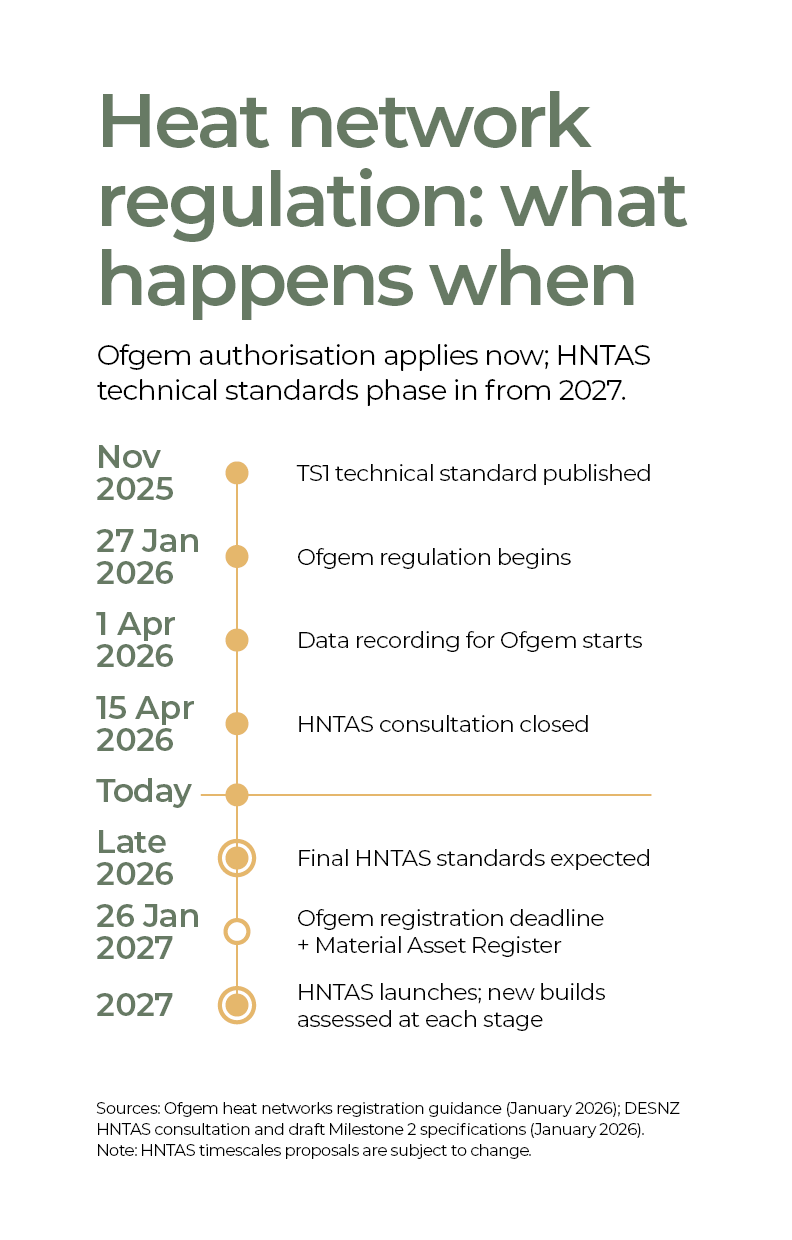
The Government has updated the Heat Network (Metering and Billing) Regulations 2014 following the introduction of the new Ofgem-led heat networks regulatory framework. The changes took effect on 27 January 2026 and are intended to avoid duplication between the existing metering and billing regime and the new market framework.
The changes apply to heat networks in England, Scotland and Wales. The existing Heat Network (Metering and Billing) Regulations continue to apply in Northern Ireland.
Why have the Regulations changed?
Responsibility for registration, operational reporting, billing transparency and wider consumer protection in Great Britain is moving into the Ofgem authorisation framework. Several provisions in the 2014 Regulations have therefore been revoked or amended, while core requirements for the installation, accuracy, replacement and maintenance of heat meters remain in place.
What has been revoked in Great Britain?
Regulation 3 – Duty to Notify: the previous notification requirement has been revoked for existing and new-build heat networks in England, Scotland and Wales. In place of the four-yearly assessment and notification to OPSS, heat suppliers must instead comply with Ofgem registration and reporting requirements.
Regulation 6 – Heat Cost Allocators, Thermostatic Radiator Valves and Hot Water Meters: this regulation has been revoked. Heat Cost Allocators can no longer be used as a means of achieving compliance in Great Britain.
Regulation 9 and Schedule 2 – Billing and Billing Information: these requirements have been revoked and replaced by Ofgem authorisation conditions covering information disclosure and bill transparency.
What remains in force?
The following metering requirements continue to apply in Great Britain until they are amended or revoked by future legislation:
Regulation 4 – Duty to Install Meters: partially retained. Meter installation obligations remain for buildings in the viable class and where an earlier cost-effectiveness assessment concluded that meters should be installed.
Regulation 5 – Requirements Relating to Meters: installed meters must accurately measure, memorise and display each final customer’s consumption of heating, cooling or hot water.
Regulation 7 – Replacement of Existing Meters: replacement meters must meet the applicable accuracy and functionality requirements. Any claim that replacement is technically impossible or unreasonably costly must be evidenced.
Regulation 8 – Ongoing Obligations: partially retained. Installed meters must continue to operate correctly, be properly maintained and be periodically checked for errors.
Existing heat networks
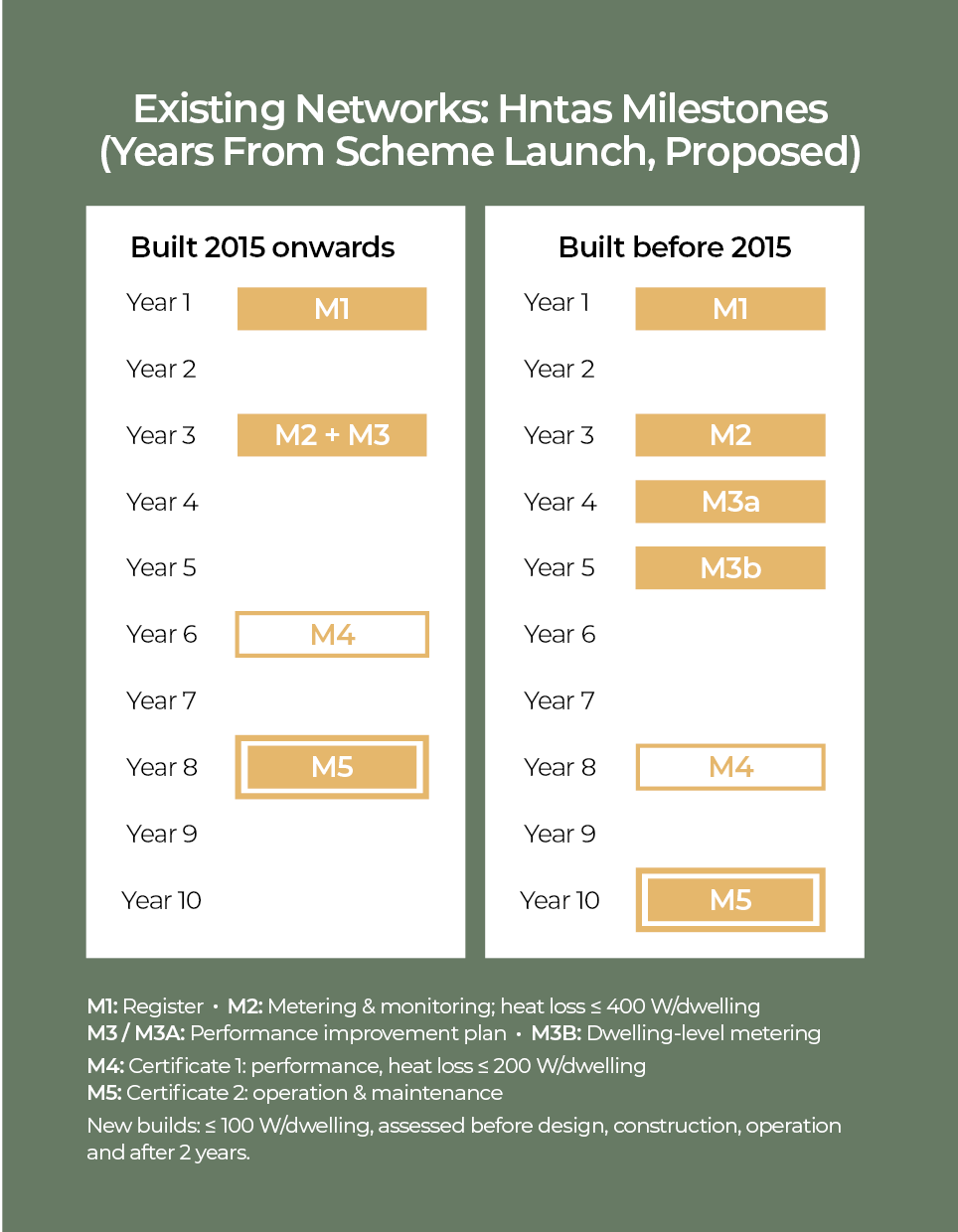
Networks that were operational in January 2026 remain subject to any meter-installation obligation arising from a previous cost-effectiveness assessment. Where an assessment determined that meter installation was required, the obligation continues.
Where a previous assessment concluded that installation was not cost-effective, the network is no longer required to repeat that assessment every four years. Existing meters must nevertheless continue to be operated, maintained and checked.
New-build heat networks
For new networks in buildings within the viable classification, the duty to install meters remains. The former notification and billing provisions have been replaced by Ofgem requirements on registration, information disclosure and bill transparency.
Meter maintenance and evidence
Heat suppliers should continue to follow manufacturers’ maintenance requirements, including recalibration where applicable. The guidance recommends periodic site checks, remote monitoring where available, investigation of anomalies, and checks against warranties and specifications.
Evidence of maintenance should be retained, including invoices, receipts, inspection logs and testing or recalibration certificates and reports. The guidance strongly advises that recalibration or testing is undertaken by the meter manufacturer or an organisation accredited by the United Kingdom Accreditation Service (UKAS).
Northern Ireland
The Heat Network (Metering and Billing) Regulations 2014 continue to apply in Northern Ireland. This includes notification, cost-effectiveness assessment, metering and billing requirements. Heat suppliers operating in Northern Ireland should therefore continue to use the applicable building classifications and existing HNMBR compliance guidance.
What should heat network operators and suppliers do now?
- Confirm whether each network is located in Great Britain or Northern Ireland and apply the correct regulatory requirements.
- Do not treat the revocation of the previous notification duty as removing the need to register and report under Ofgem’s framework.
- Review any historic cost-effectiveness assessment and confirm whether it created an outstanding meter-installation obligation.
- Maintain installed meters, investigate faults and retain evidence of inspection, testing, maintenance and recalibration.
- Review billing and customer-information arrangements against Ofgem’s authorisation conditions rather than the revoked Regulation 9 and Schedule 2 requirements.
- Do not rely on Heat Cost Allocators as a route to compliance in Great Britain.
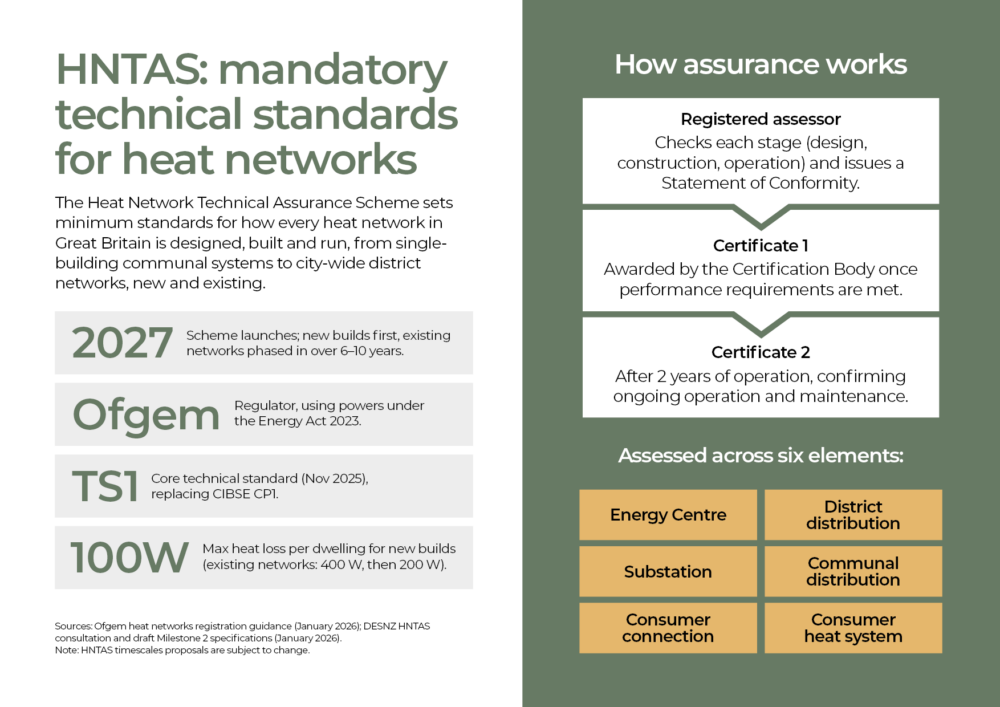
- Monitor further changes as the Heat Network Technical Assurance Scheme and Heat Network Technical Standard 1 are developed.
- Register on the Ofgem framework as required under the operator and / or supplier requirements
What happens next?
Further amendments or revocations are expected as legislation is introduced to deliver the Heat Network Technical Standards. Heat network operators and suppliers should continue to monitor Government and Ofgem publications before making metering or compliance decisions.
This publication provides a high-level summary and is not legal advice. Organisations should refer to the official February 2026 guidance and the applicable legislation when determining their duties.
Inspired can support heat network owners, operators and suppliers with regulatory scoping, registration readiness, metering compliance reviews, billing transparency, policy development and preparation for HNTAS and TS1.
If you have any questions or require further support, please contact your Account Manager or dedicated Inspired point of contact.