







Rising temperatures, soaring prices: How the UK heatwave has hit the energy market
Temperatures may ease over the weekend, but the broader trend looks set to continue.
Weather has an immediate and measurable impact on energy markets, with the current heatwave a timely example.
Over the last few days, energy prices have been climbing alongside temperatures – driven by a combination of high demand, low wind generation and tighter supply conditions.
Here’s a closer look at what’s been happening.
How is the heatwave impacting the UK energy market?
The Met Office issued a rare red weather alert for Wednesday 24 June and Thursday 25 June, with temperatures forecast to reach 40°C in parts of the UK – pushing day-ahead power prices on Tuesday to their highest level in 18 months.
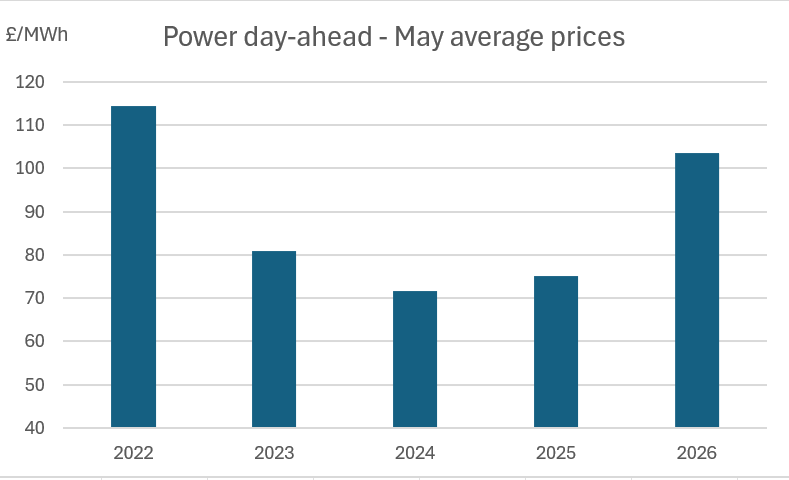
May’s heatwave had already set the tone, with monthly average prices reaching their highest since the 2022 energy crisis.
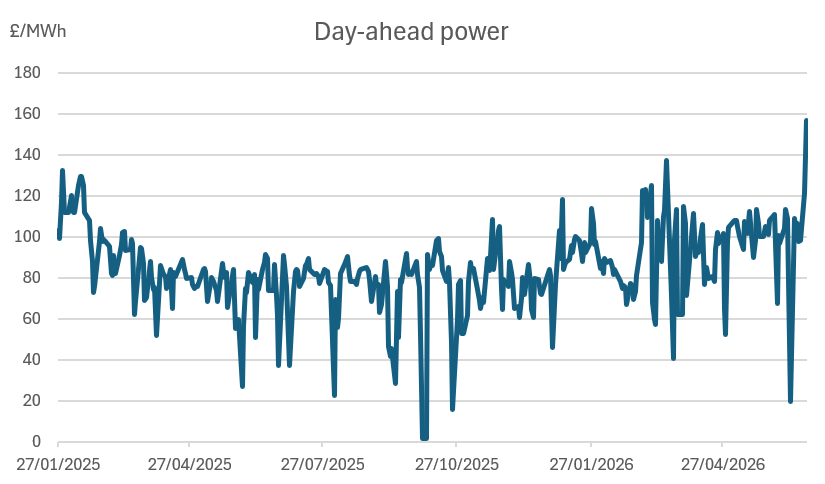
Tuesday 23 June marked the highest day-ahead power price for eighteen months at £157/MWh.
The following day, National Energy System Operator (NESO) issued a rare Electricity Margin Notice to call in more power generation for evening’s peak demand period.
Although later withdrawn, this notice prompted emergency imports from the Netherlands at prices reaching £1,379/MWh.
Tightening fundamentals drove significant volatility across GB power markets, with imbalance prices peaking at 79p/kWh on Tuesday and day-ahead auction prices reaching 46.8p/kWh during the Wednesday evening peak.
What’s influencing this price surge?
Lack of breeze is driving low wind generation in the UK, with gas-fired generation filling the gap – compounded by planned summer maintenance – while air conditioning demand is pushing consumption above normal levels, hence the elevated prices.
Our neighbours in Western Europe are also struggling with the extremes.
For instance, France need cool and high river levels to service their nuclear fleet. River temperature restrictions forced EDF to curtail around 4.8% (3GW) of nuclear output, reducing fleet availability to its lowest level since October 2025.
In turn, the Nordics are largely dependent on hydro generation, while Italy struggles with their supply equally. European spot power prices have also surpassed levels seen during the previous winter peak.
All this has a knock-on impact to the UK as we are connected to our neighbours by interconnectors and may be required to import or export power in response to price and supply conditions.
What could happen next?
Temperatures are expected to ease over the weekend. That said, European power systems remain under pressure.
French nuclear constraints, tighter regional supply margins, and Norwegian hydro levels could all continue to influence UK prices through interconnector flows, as neighbouring markets compete for available generation.
This is unlikely to be the last summer of its kind. Early forecasts suggest 2027 could be warmer than 2026 – pointing to persistent volatility in UK and European power markets in the years ahead.
What does this mean for your organisation?
Events like this heatwave highlight how quickly energy market conditions can change. Access to expert insight means your organisation is in a stronger position to respond when market conditions evolve.
Inspired’s regular market updates and forward assessments help you navigate the market with clarity.
You can subscribe to daily and weekly market insights, along with our monthly webinars here.
Moreover, the demand pressures created by this heatwave underlines why resilience is a key element of an effective energy strategy, from a tailored procurement approach responsive to market conditions to how you manage daily consumption.
For instance, building controls help ensure air conditioning runs efficiently, reducing wastage and limiting the impact of demand spikes on your costs.
How can Inspired help?
Inspired’s experts can help you find the best value approach for your business – please email [email protected] to find out more.